How to track home improvement costs for taxes
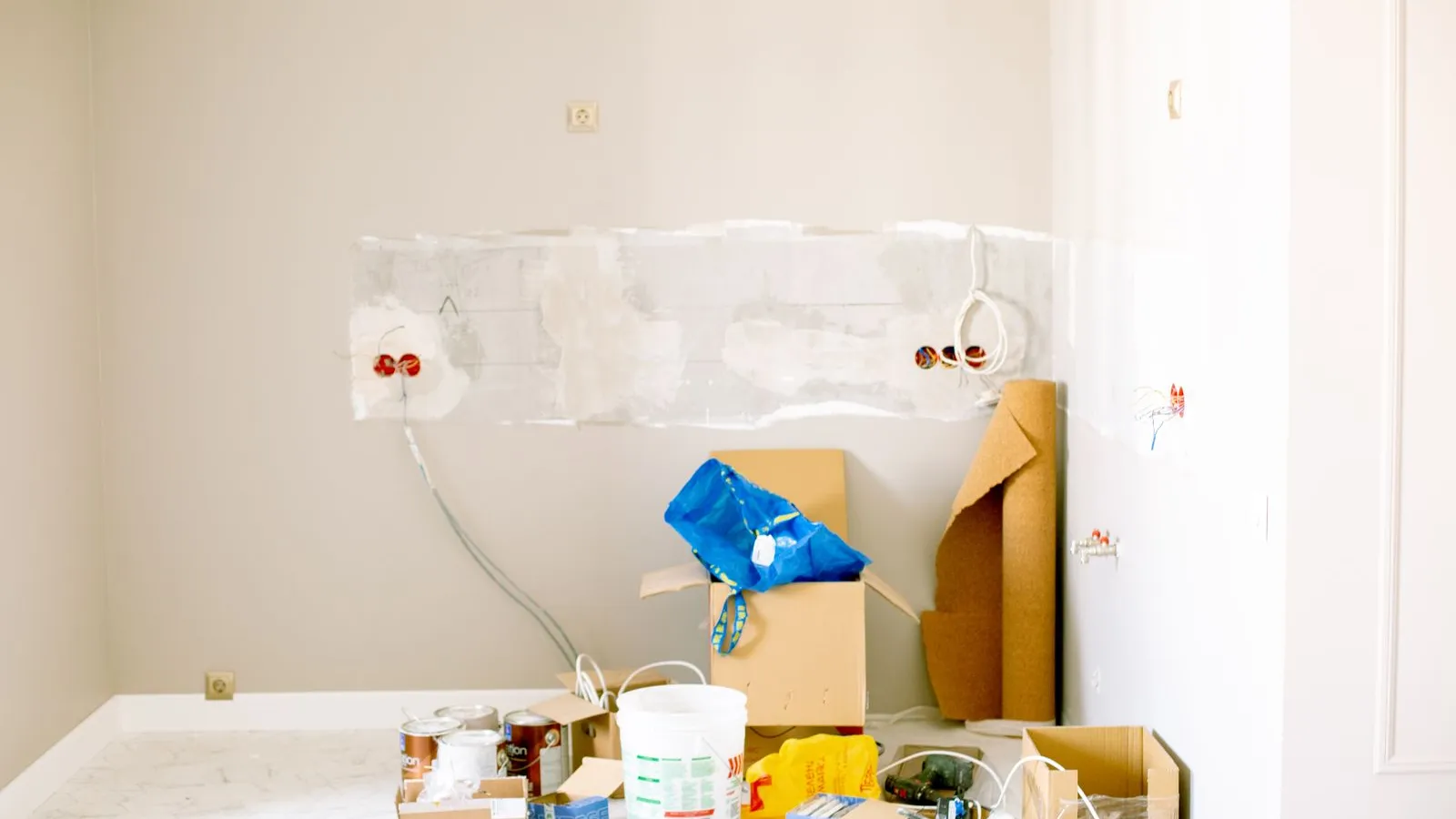
Keep every receipt for the project in one place from day one, split any receipt that mixes the job with other shopping, and separate improvements from repairs as you go. That gives you a running total against your budget and the records the IRS asks for. On your main home, improvements add to your basis, which lowers your taxable gain when you sell; repairs don't. On a rental, repairs are generally deducted right away and improvements are depreciated, and IRS Publication 527 puts it plainly: "Separate the costs of repairs and improvements, and keep accurate records."
| Your main home | A rental property | |
|---|---|---|
| Repairs and maintenance | Not deductible, and don't add to basis | Generally deductible in the year you pay |
| Improvements | Add to your basis, reducing the gain when you sell | Capitalized and depreciated; 27.5 years for residential rental property |
| How long to keep the receipts | Until 3 years after the due date of the return for the year you sell | Until the period of limitations ends for the year you sell |
Why receipts matter even on your own home
You can't deduct improvements to the home you live in, but they aren't wasted. Improvements add to your home's basis, and when you sell, your gain is roughly the sale price minus that adjusted basis. The higher the basis, the smaller the gain.
Many people never owe tax on a home sale: if you meet the eligibility test, you can exclude up to $250,000 of gain, or $500,000 for a married couple filing jointly. But you only know you're under the limit if you can add up your basis, and gains above it are taxable. Using part of the home for business or renting part of it out can also change the math.
There's also the plainer reason: remodels go over budget one trip to the hardware store at a time. A total you can see while the work is still going is the only one that helps you stop.
What counts as an improvement
IRS Publication 523 defines improvements as work that adds to your home's value, prolongs its useful life, or adapts it to new uses. Its examples include:
- Additions: a bedroom, bathroom, deck, garage, porch or patio.
- Systems: heating, central air conditioning, wiring, a security system.
- Exterior: a new roof, new siding, storm windows or doors.
- Interior: built-in appliances, a kitchen modernization, flooring, wall-to-wall carpeting.
- Lawn and grounds: landscaping, a driveway, a fence, a swimming pool.
What doesn't count: repairs and maintenance that keep your home in good condition without adding value or life, such as painting, fixing leaks, filling holes or cracks, or replacing broken hardware. Nor do improvements that are no longer part of the home, like carpet you've since replaced, or anything with a life of less than a year when installed.
If you claimed an energy credit for an improvement you've added to your basis, such as a solar energy system, subtract the credit from your basis.
If it's a rental: repairs versus improvements
On a rental property, the split decides when you get the deduction. Repairs and maintenance are generally deducted in the year you pay for them, unless you're required to capitalize them. An expense is an improvement, and must be capitalized, if it:
- betters the property: fixes a pre-existing defect, enlarges or expands it, or increases its capacity, strength or quality;
- restores it: replaces a substantial structural part, or rebuilds it to a like-new condition;
- adapts it to a use that isn't consistent with how it was being used when you started renting it.
Improvements are generally depreciated as if they were separate property; an addition to a residential rental, for example, over 27.5 years. Pub 527 also describes two elections, the de minimis safe harbor and the routine maintenance safe harbor, that can let you deduct some costs you'd otherwise capitalize. Ask your tax professional whether they fit.
How to track a remodel, step by step
- Start the project before the first purchase. Give it a name and a budget. Receipts are easiest to file on the day you get them.
- Capture every receipt as you go. Hardware store receipts, contractor invoices, online orders, delivery fees, dumpster rental. Thermal receipts fade, so photograph them the same day (the IRS accepts digital copies).
- Split receipts that mix the job with other shopping. A run that buys lumber and a new garden hose is part remodel, part not. Only the project lines belong in the project.
- Mark each cost as a repair or an improvement. On your home, that decides what adds to your basis; on a rental, whether you deduct it now or depreciate it.
- Watch the total against the budget. A number you check every week is a budget; one you add up at the end is a post-mortem.
- Export it when the job ends, and keep it. Hand your CPA one file instead of a shoebox, and keep the records until 3 years after the due date of your return for the year you sell.
Mistakes that cost money later
- Relying on bank or card statements. A statement shows the store and the total, not what you bought, so it can't separate the improvement from the household shopping.
- Paying a contractor with no invoice. Without one there's no record of what the work was, and nothing to show it was an improvement.
- Throwing the receipts out when the job is finished. The IRS clock starts when you sell, which may be decades after the work.
- Mixing two properties in one pile. If you're working on a rental and your own home at once, two projects keep a deductible cost from being lost among personal ones.
It works for more than remodels
The same approach tracks any cost that runs across many stores and many weeks: a car repair, a trip, a wedding. Bilbx Projects works the same way for all of them, and one receipt can be split across more than one project.
For how long to keep everything else, see how long to keep receipts for the IRS.
Sources
Common questions
Are home improvements tax deductible?
Not on your main home. Improvements add to your home's basis instead, which reduces your gain when you sell. On a rental property, improvements are capitalized and depreciated over time, while ordinary repairs are generally deducted in the year you pay for them.
Do I need to keep receipts for home improvements?
Yes, if you want the cost counted. Improvements increase your home's basis only if you can show what they cost. IRS Publication 523 says to keep records of your home's adjusted basis until 3 years after the due date of your return for the year you sell.
What counts as a home improvement for basis?
Work that adds to your home's value, prolongs its life or adapts it to new uses: an addition, a new roof, central air conditioning, new wiring, a kitchen modernization, a fence or a driveway, among IRS Publication 523's examples. Painting, fixing leaks and replacing broken hardware are repairs and don't count, unless they're part of an extensive remodeling job.
Can I deduct repairs on a rental property?
Generally yes, in the year you pay for them, if you aren't required to capitalize the cost. Anything that betters, restores or adapts the property is an improvement and must be capitalized. IRS Publication 527 tells landlords to separate the costs of repairs and improvements and keep accurate records.
Every figure on this page is checked against the IRS's own guidance and linked in the sources above. Last checked . Thresholds change each tax year, so if you are reading this well after that date, confirm the current figures before you rely on them. Terms.
Keep reading
Does the IRS accept photos of receipts?
How electronic receipt records can meet IRS recordkeeping requirements, what clear copies need to show, and why retrieval matters.
ReadHow long do you need to keep receipts for the IRS?
Three years — or up to seven for certain deductions. When the IRS clock starts, which business records to hold, and when digital copies are enough.
ReadHow to split receipts between business and personal use
How to apportion mixed receipts and recurring bills for tax deductions. IRS, ATO, and HMRC rules for business-use percentages, phone bills, and store dockets.
Read