Are photos of receipts accepted by the ATO?
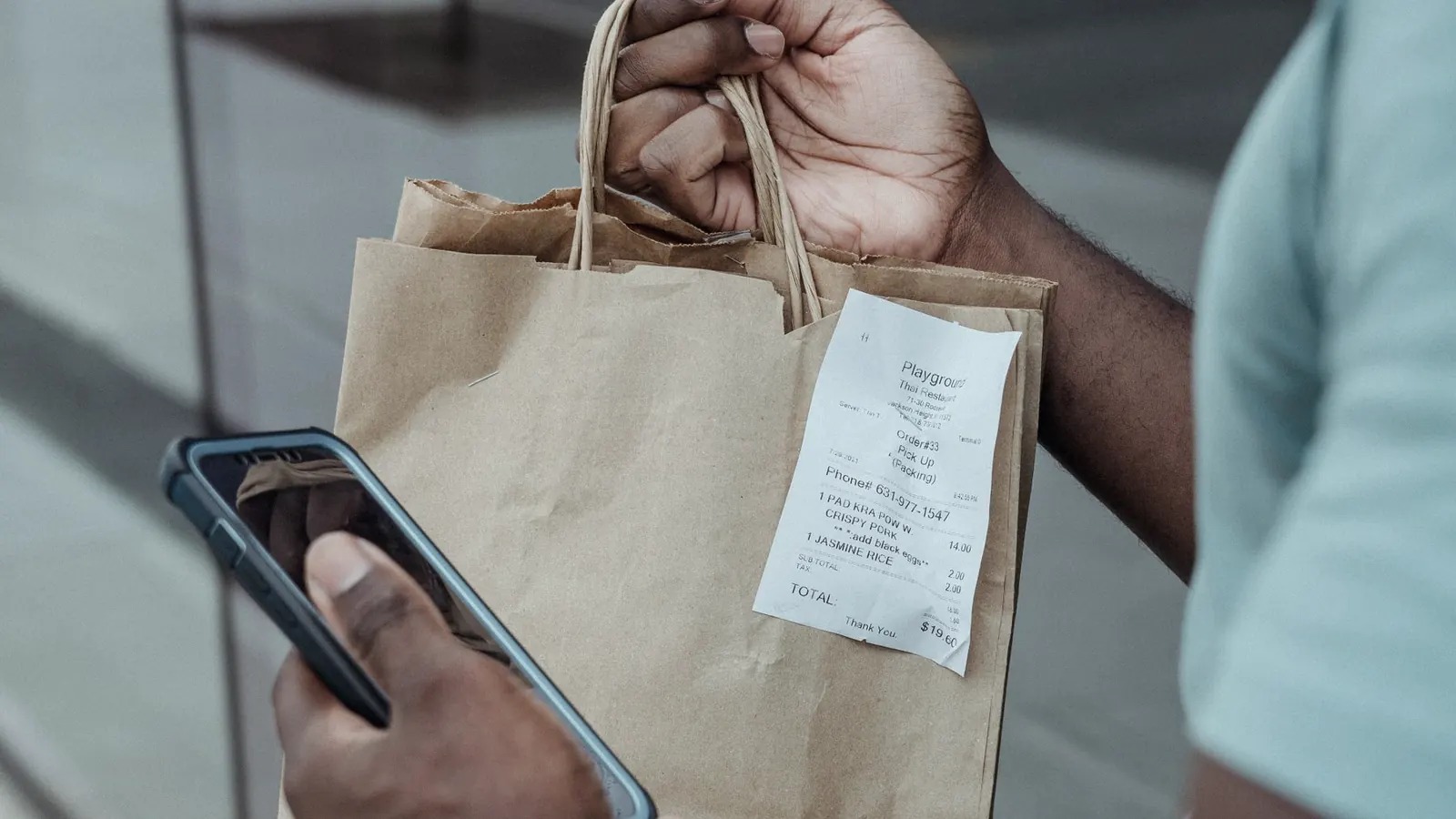
Yes. The ATO accepts electronic copies of your records, including photos and scans, as long as each one is a true and clear copy of the original.
That means you don't have to keep the paper. Which matters more than it sounds, because of a physical problem the tax rules don't mention.
The reason this question matters at all
Most Australian register receipts are printed on thermal paper. There is no ink — the paper is coated with a dye that darkens under heat, and the same chemistry that prints it also erases it. Heat, sunlight, humidity, and contact with plastic all accelerate the fade.
A thermal receipt kept in a glovebox or a kitchen drawer can be unreadable inside a year. Some go blank in months.
The ATO expects you to hold written evidence for 5 years from the date you lodge.
What "true and clear copy" means in practice
There's no prescribed resolution or file format. The test is whether the copy faithfully shows what the original showed. In practice, your photo needs to carry all five things written evidence requires:
- the supplier's name
- the amount
- the nature of the goods or services
- the date the expense was incurred
- the date of the document
So the practical rules are unglamorous:
- Get the whole receipt in frame, including the top and the bottom. The supplier name is at the top and the date is often at the very bottom — a crop that loses either one has lost the evidence.
- Make sure it's readable. If you can't read the total on your own screen, it isn't a clear copy.
- Flatten it. A curled receipt photographed at an angle blurs half the lines.
- Avoid glare. Shade beats flash on glossy thermal stock.
- Long receipts: two overlapping photos are fine, as long as between them everything is legible and it's obvious they're the same document.
If the receipt doesn't state what you bought — common at hardware and stationery shops — you can annotate it. Write on the paper before you photograph it, or keep a note alongside the image.
Digital doesn't shorten the retention period
The obligation is the same regardless of format: five years from the date you lodge the return the record supports. A photo taken in August 2026, supporting a return lodged in October 2027, needs to still exist in October 2032.
Which raises the question everyone skips.
Where the digital copy actually lives
A photo on a phone is not a record-keeping system. Phones get lost, stolen, dropped, replaced and wiped, and camera rolls are where receipts go to become un-findable.
Three things a digital record needs to survive five years:
- It must exist somewhere other than one device. Cloud backup, or a copy somewhere else. A single phone is a single point of failure.
- It must be findable. Five years of receipts you can't search by supplier, date or amount is a shoebox with extra steps. Under a question from the ATO, "I have it in here somewhere" and "I don't have it" produce the same outcome.
- It must stay readable. Keep the image, not a compressed thumbnail.
This is where the ATO's own myDeductions tool in its app is worth knowing about — it captures receipts and lets you upload the data into myTax at lodgement. It's designed for capture rather than long-term retention, and the five-year obligation still sits with you, but for the tax-specific case it's free and it works.
What about emailed receipts and PDFs?
Same principle. An emailed tax invoice is already electronic and already a record — no photograph needed. It's usually better evidence than a photo, because it's itemised, text-searchable, and can't be blurry.
The weak point is your inbox. Receipts scattered across five years of email, under sender names you'd never think to search, are technically retained and practically lost. Getting them somewhere organised is the same problem as the paper.
Does a photo work for returns and warranties too?
Yes, and the standard is lower there. For a consumer guarantee claim the shop needs proof you bought the item from them, and a clear photo of the receipt does that comfortably — see what counts as proof of purchase.
In fact the photo is often better than the original by the time you need it, for exactly the thermal-paper reason above.
Summary
- Photos and scans are accepted, provided each is a true and clear copy of the original.
- Once you have one, you can discard the paper.
- The copy must show all five things written evidence requires — get the whole receipt in frame.
- The retention period is unchanged: five years from lodgement.
- Thermal receipts fade well inside that window, which makes capturing them digitally the practical default rather than a nice-to-have.
Sources
Common questions
Does the ATO accept photos of receipts?
Yes. The ATO accepts electronic copies of records provided they are a true and clear copy of the original. A legible photo of a receipt is valid written evidence.
Can I throw away paper receipts after scanning them?
Yes, once you have a true and clear digital copy. The ATO does not require you to keep the paper original as well, which matters because thermal receipts fade long before the five-year retention period ends.
Does a photo need to show the whole receipt?
It needs to show everything written evidence requires: the supplier's name, the amount, what was bought, the date the expense was incurred and the date of the document. A crop that cuts off the date is not a true and clear copy.
How long do I need to keep the digital copy?
Five years from the date you lodge the return it supports — the same as paper. The format doesn't change the retention period.
Every figure on this page is checked against the ATO's own guidance and linked in the sources above. Last checked . Thresholds change each tax year, so if you are reading this well after that date, confirm the current figures before you rely on them. Terms.
Keep reading
How long do you need to keep receipts for the ATO?
Five years — but from a date most people get wrong. What records to keep, what a valid receipt has to show, and when the clock actually starts.
ReadCan you claim deductions without receipts?
The $300 rule explained properly — what it actually lets you do, the expenses it excludes, and why treating it as a free allowance is a mistake.
ReadWhat counts as proof of purchase in Australia?
The full list of what a shop has to accept as proof you bought something — and how the ATO's standard for the same receipt is stricter.
Read